Startups and Scale-ups: How the Board’s Role Evolves as Companies Grow
Martin Söderberg in conversation with Katarina G. Bonde
Board work is never one-size-fits-all. The challenges facing a young startup are fundamentally different from those of an established or listed company, and the role of the Board needs to evolve accordingly.
Few people have experienced these different stages from as many perspectives as Katarina G. Bonde. With an executive background in international technology companies in Sweden and the United States, she has worked as CEO, Board member and Chair across startups, scale-ups and listed companies.
Following her participation as a guest speaker at IMD in Lausanne in February 2026, Martin Söderberg spoke with her about what Board members need to understand when working with startups and scale-ups, how the role of the Board changes as companies grow and why these mandates offer so many unexpected learning experiences.
Katarina, you have extensive Board experience in companies at very different stages of development. How does the role of the Board change as a company grows?
An entrepreneur starting a company obviously needs capital to get going and must fulfil certain administrative requirements to get the company registered. Very often, the first Board consists of a few family members and friends.
It is an exciting and often turbulent time, full of surprises and pitfalls. Pretty much everything can, and sometimes will, go wrong at the same time.
At this stage, the focus is clearly on raising capital, finding the first customers, fulfilling administrative obligations and simply surviving.
Even though the founders should have a vision of what problem they are solving, for whom and with which product or service, things often change quickly. Vision, strategy, products, services, markets and target segments may all need to be adapted to generate revenue and keep the company alive.
Being a Board member at this stage means, to some extent, getting your hands dirty and helping to hunt for capital.
Shareholders are also real people with different needs. Some may not be able or willing to provide more capital, while others may want to exit. This can create considerable friction. Rebuilding and restructuring are often constant features of this phase.
And what happens as the startup begins to scale?
Once the startup reaches a certain level, functions need to be organised in a more structured way, although the distinction between the Board and the Executive Board may still be somewhat blurred.
As turnover increases and the organisation becomes more established, the Managing Director increasingly needs advice from Board members who can bring an independent view and an outside perspective.
The Board must of course always ensure that the company is properly governed and that legal requirements concerning accounting, reporting, compliance and other matters are fulfilled.
Strategy, vision and far-reaching ambitions are always important. But when a startup is taking its first stumbling steps, a five-year strategy is understandably less pressing if you do not even know whether the available capital will allow the company to survive the next twelve months.
At a later stage, when the company has perhaps between 100 and 1,000 employees, is profitable and has developed into a going concern, the Board will typically spend much more time asking questions such as: Where should we be in three to five years?
The Board increasingly takes a helicopter view. Its responsibilities also expand to areas such as data protection, AI regulation and whistleblowing policies. This is closer to the role that many people traditionally associate with a Board mandate.
The important point is that the role of a Board member can be very different from one stage to another and needs to adapt continuously to the company’s development.
How does the Board’s role change when more shareholders and investors become involved?
As soon as there is more than one shareholder, the Board takes on an important additional function.
Several shareholders usually mean different expectations and sometimes diverging views. Investors may see things differently from the people involved in the company’s daily operations.
The Board therefore increasingly needs to understand these different perspectives, manage group dynamics and work towards alignment and consensus around common expectations.
In plain language, Board members often find themselves mediating disagreements.
Are there particular governance challenges in family-owned companies?
In family-owned companies, there is a significant risk of mixing business topics, such as vision, strategy, customers, markets, sourcing and growth, with family expectations and family issues.
In my view, it is therefore important to have independent, non-family Board members.
One practical way of reducing the risk of mixing business and family matters is to establish a separate Family Board or Family Council. This can be particularly useful in larger families with widely distributed ownership.
Having one or two family members who sit on both bodies can also help maintain the connection between the family and the company.
Are there other transitions that Boards need to handle with particular care?
One danger is allowing a long-serving CEO to move directly onto the Board or, even more critically, to become Chair.
That person may find it difficult to remain objective when a new CEO comes in. I believe there should be a period of distance before a former CEO joins the Board.
Another classic difficulty is the transition from the founder to the next CEO.
In my experience, this is one of the hardest transitions for a company. The organisation has often been shaped very strongly by its founder and may find it difficult to adapt to new thinking, new routines and a different management style.
The challenge is therefore not simply to find the “perfect” successor. The Board also needs to help the organisation itself prepare for the transition.
How did you first get involved with startups?
Serendipity.
I started my working life in large corporations, mainly in sales and marketing, and one day I received an offer to step in as CEO of a medium-sized company.
Later, my husband and I decided to move to the United States and I had to start fresh. That is when I first came into contact with the startup industry.
I had management experience, but not with startups, and I was hired to replace the founder of a scale-up company.
The company had venture capital investors, and I was initially quite surprised by the way they encouraged us to operate in the red and continued putting more money into the business rather than focusing immediately on profitability.
I learned that their perspective was different. For them, the game was about being in a race in a new segment and getting ahead of the competition. They knew they would win some and lose some.
Tell us about your first Board mandate with a startup.
My first one was while I was living and working in Seattle.
At the time, I was CEO of a scale-up myself and simultaneously served on the Board of an earlier-stage startup.
It was obvious that the CEO of the company whose Board I was on appreciated having someone alongside him who was going through similar experiences.
It also worked the other way around. Being on the outside of another company helped me reflect on my own role as CEO and improve the way I worked with my own Board.
How would you differentiate the experience of being a Board member in a startup or scale-up from serving on the Board of a mature listed company?
There are some obvious differences, such as having fewer resources available and often working with less experienced leadership teams.
But there is also frequently less alignment between founders and other shareholders, many of whom may be angel investors.
I find that I spend a considerable amount of time aligning shareholders or, in plain language, mediating disagreements.
That is an important part of Board work in younger companies.
You seem to have a particular interest in startups and scale-ups. What attracts you to them?
Actually, what I enjoy is moving between companies of very different sizes and with different ownership structures, private, public and government-owned.
The reason is that you can bring so much experience from one environment into another.
A startup needs Board members who understand what a larger organisation looks like and who can help the company anticipate the next several stages of development.
At the same time, a large company, particularly in today’s world, often needs to be pushed to become more nimble, to try new things, to reorganise and to do more with less.
The learning therefore goes in both directions.
What have you enjoyed most as a Board member in startups and scale-ups?
The best part of the job is the excitement of trying, failing and ultimately finding traction.
With Zimpler, for example, too many industries and areas were initially being pursued in parallel.
Once the focus was narrowed to just two segments and the company was downsized, everyone began pulling in the same direction. The company found traction and became profitable.
That ultimately generated external interest and resulted in a good exit for the founders and investors.
Experiencing that kind of transformation is one of the most rewarding aspects of working with growing companies.
Three things Board members should keep in mind before accepting a startup or scale-up mandate
1. Be prepared to invest time.
It takes a lot of time, and there will generally not be as much administrative support as there is with a larger Board.
2. Help the team maintain the strategic perspective.
The management team is already dealing with operational details every day. Your role is to help them see the end of the tunnel, rather than digging in the dirt alongside them.
3. Support and encourage the founder and CEO.
No one else may give the founder-CEO a pat on the back. It can be a lonely job. Board members should not underestimate the value of encouragement and constructive support.
About the Author
Katarina G. Bonde has an executive management background in international technology companies and divides her time between Sweden and California.
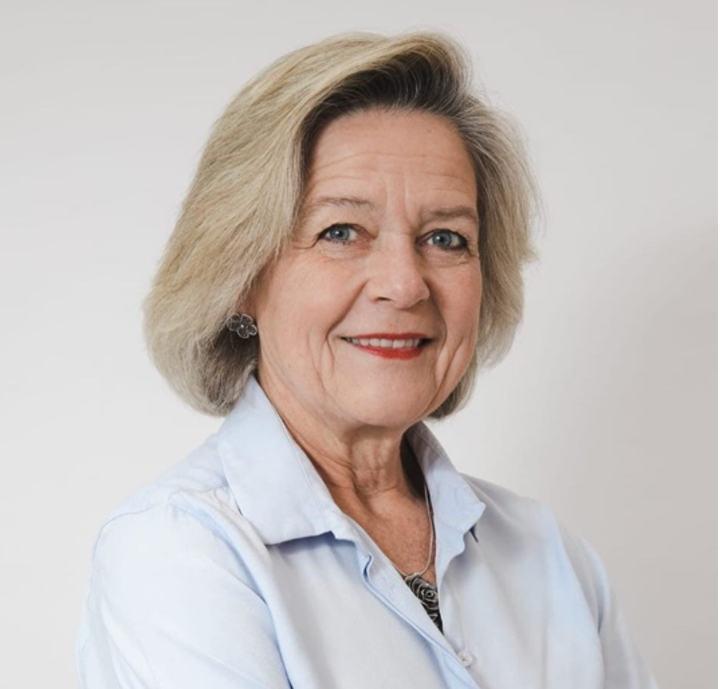
She spent 15 years in Seattle building fast-growth technology companies, including as CEO of Unisite Inc. and Managing Director of Captura International. Before moving to the United States, she held senior executive positions in Swedish technology companies, including CEO of Programmator Industri AB and Director Partner Sales at Digital Equipment Sweden.
Her current Board positions include Chair of PowerCell Group AB, a producer of fuel cells for marine applications and power generation, and Chair of Mentimeter AB, the interactive meeting software company. She also serves as Board Director at Mycronic AB and Viaplay and is a member of the Listing Committee of Nasdaq Sweden.
Her previous Board positions include Stillfront Group AB, Zimpler, Bure ACQ, Opus Group AB, Nordax Bank, the Sixth AP Fund, DIBS Payment, Netreflector Inc. and ExpensPath Inc. in the United States, as well as the Royal Swedish Opera and Seattle Opera.
Katarina regularly contributes to Board seminars and shared her perspective on Board work at IMD in Lausanne in February 2026.
Beyond the boardroom, she is also an accomplished winemaker and works together with her husband, Bengt Åkerlind, at their family winery West Wines in California.
About the interviewer
Martin Söderberg is a member of the SwissBoardForum and an independent strategy consultant who supports clients with strategy reviews and transformation.
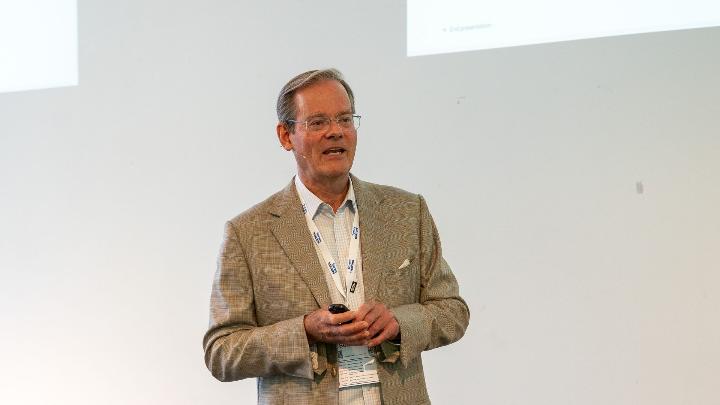
An IMD MBA graduate, he brings around 35 years of international experience across insurance, financial services, security printing, logistics, automotive, management consulting, packaging and IT. His professional experience includes roles with Zurich Insurance, Orell Füssli, Swiss Post, General Motors, McKinsey & Company, Tetra Pak and Digital Equipment Corporation.
Martin holds an MSc in Engineering Physics and a PhD in Physics from KTH Royal Institute of Technology in Stockholm. He is also Vice-President and Treasurer of the IMD Alumni Club of Lausanne.
Translation note
The original text was written in English. The French version was produced with the support of AI. In the event of any divergence in interpretation, the English version shall prevail.
Disclaimer
Dieser Artikel ist Teil der Reihe "Network Briefs", Reflexionen und Impulse von Mitgliedern des SwissBoardForum». Die Inhalte geben die persönliche Meinung der Autorin oder des Autors wieder und entsprechen nicht zwingend der Position des SwissBoardForum. Ziel ist es, aktuelle Fragen aus der Praxis von Verwaltungsräten aufzugreifen und unterschiedliche Perspektiven aus dem Netzwerk sichtbar zu machen: persönlich, relevant und anregend für die Mandatsarbeit. Die französische Version dieses Artikels wurde mithilfe eines Tools der künstlichen Intelligenz erstellt. Der Originaltext wurde auf Deutsch verfasst. Bei Abweichungen in der Auslegung ist die deutsche Originalfassung massgebend